

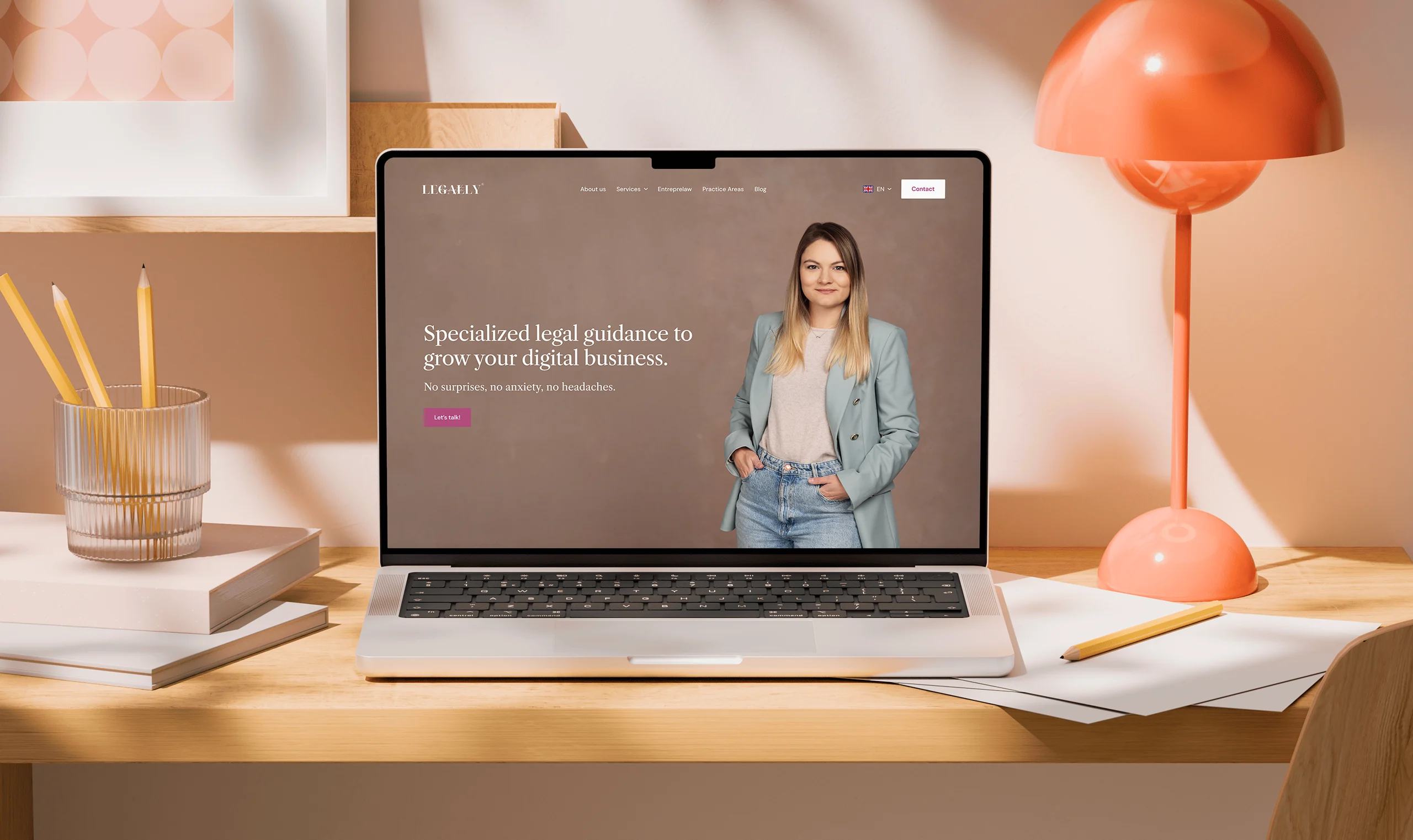
Ana-Maria Drăgănuță Briard built a different kind of legal practice: remote-first, startup-fluent, with a focus on the client’s wellbeing, but nothing in how the firm presented itself made that visible. The positioning was generic, the website copy led with services instead of outcomes, and the emotional experience clients described in interviews was nowhere to be found on the page.
We ran a competitive analysis and brand strategy workshops, Voice of Customer research, and used those findings to define a clear positioning and rewrite the entire website. The work gave Legally Remote a distinct place in the market and a website that speaks directly to the people they’re best positioned to serve.
- UI/UX Design
- Web Development
The Context
Legal services for tech entrepreneurs and digital creators is a crowded market. Most lawyers are slow, opaque about fees, and speak in language that leaves clients more confused than when they started.
Legally Remote had been operating since 2017 with a meaningfully different approach: deep familiarity with the startup ecosystem, a no-judgment communication style, transparent pricing, and a proactive stance that helped clients think ahead rather than react to problems. Clients knew this. They said so clearly in interviews. But none of it came through in how the firm presented itself publicly.
The work
We started with a competitive deep-dive and structured brand strategy workshops with Ana-Maria. The workshops mapped the offering profile, personality, target audience, and the gap between how the brand was currently perceived and where it needed to go. The VoC research gave us the language and emotional texture to make the positioning specific.
From that foundation, we defined a clear positioning statement: Legally Remote is the legal strategist that provides specialized and supportive guidance so that tech entrepreneurs and digital creators can make confident future business decisions without legal anxiety. Every piece of copy that followed was written against that statement.
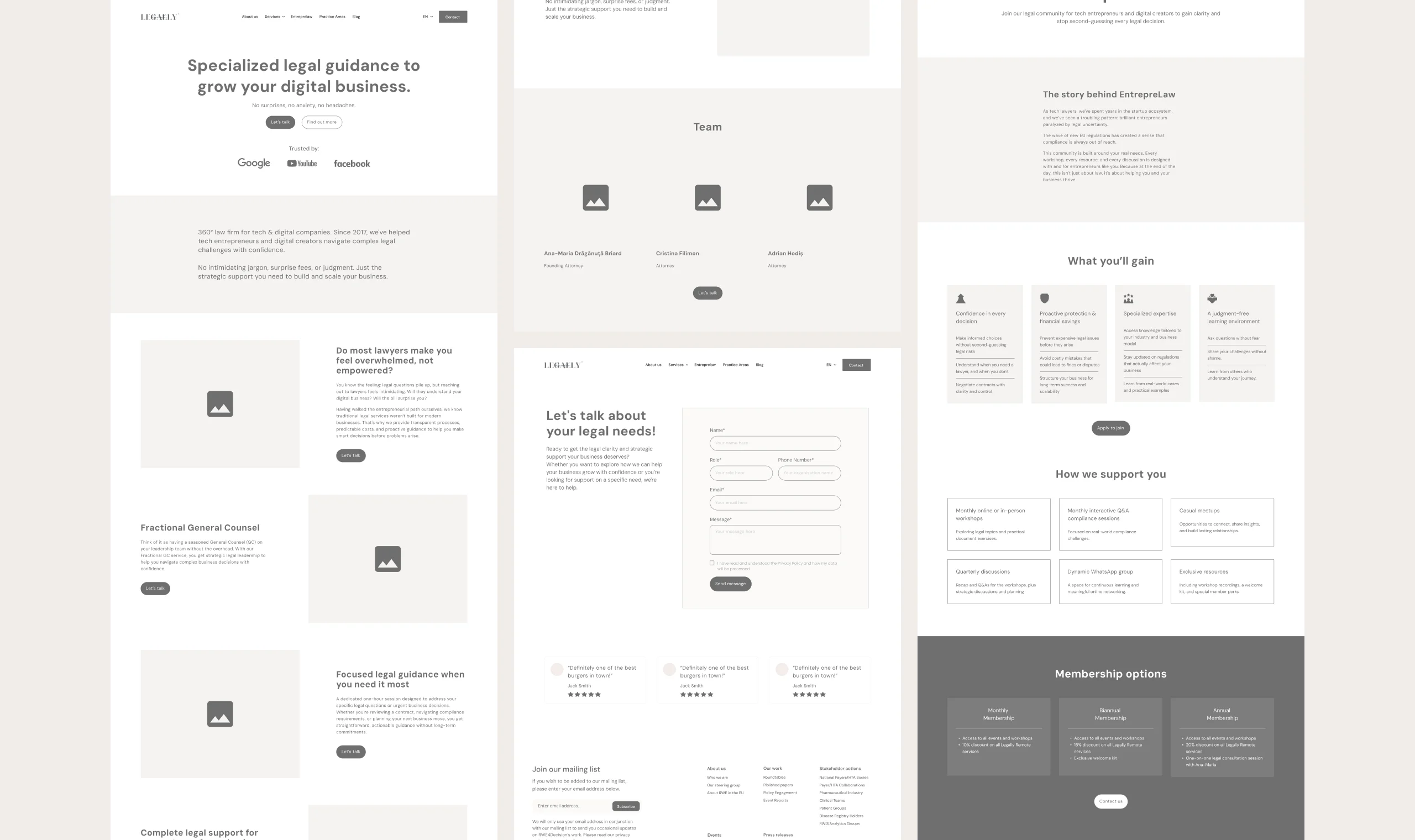
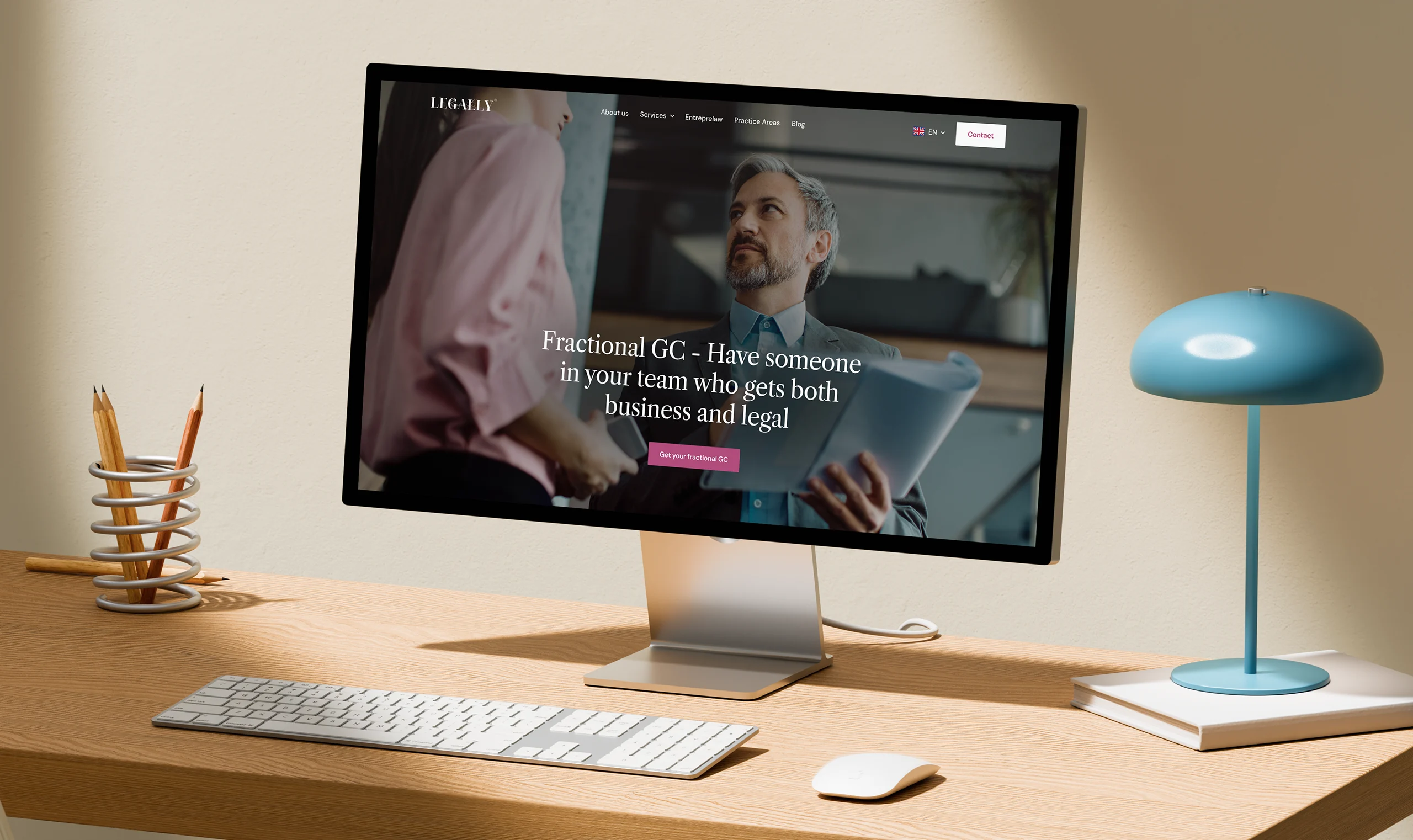
The website rewrite covered all pages. Each page was structured around what the client needs to understand and feel at that point in their journey, not around what the firm offers.
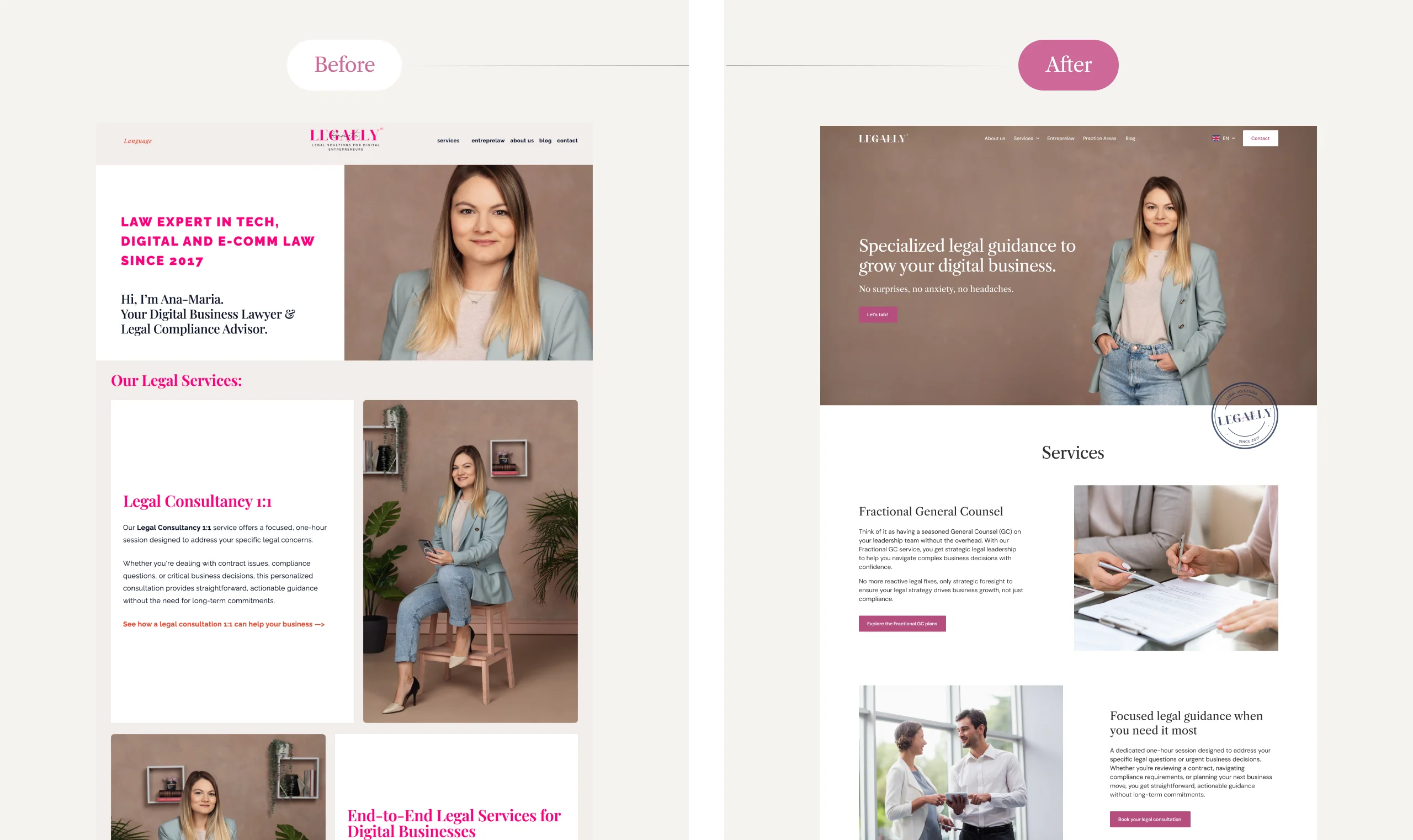
With the copy and positioning in place, we moved into redesign and implementation: refreshing the visual presentation of the existing site to match the new direction, and building it out without starting from scratch.
Aligning the vision before building the brand
First, we made sure the stakeholders were aligned on objectives and strategy. Working with a strategy consultant with over 30 years of experience, we conducted interviews with internal stakeholders (senior leadership) and external stakeholders (target and existing clients), reviewing SWOT analysis, values alignment, differentiators, and value added.
The findings formed the basis of a one-day on-site workshop with senior leadership to develop the new brand persona. Throughout the day, we set objectives, defined ideal clients, ran brand positioning exercises, and outlined execution steps.
This ensured the entire senior leadership shared the same vision for the new brand and set realistic expectations for the next phases. The team was already aligned, so conversations flowed easily.
In parallel, we ran a competitor audit to identify a market gap where Backbone would be best positioned.
The Results
Legally Remote moved from describing what it does to articulating what clients gain. The brand essence gave the whole website a consistent point of view instead of a service catalog.
Generic legal language was replaced with copy rooted in actual client pain.
Service pages were reorganized around the client’s business stage rather than the firm’s service categories. The redesign brought the visual presentation in line with the new direction, implemented directly on the existing site.
