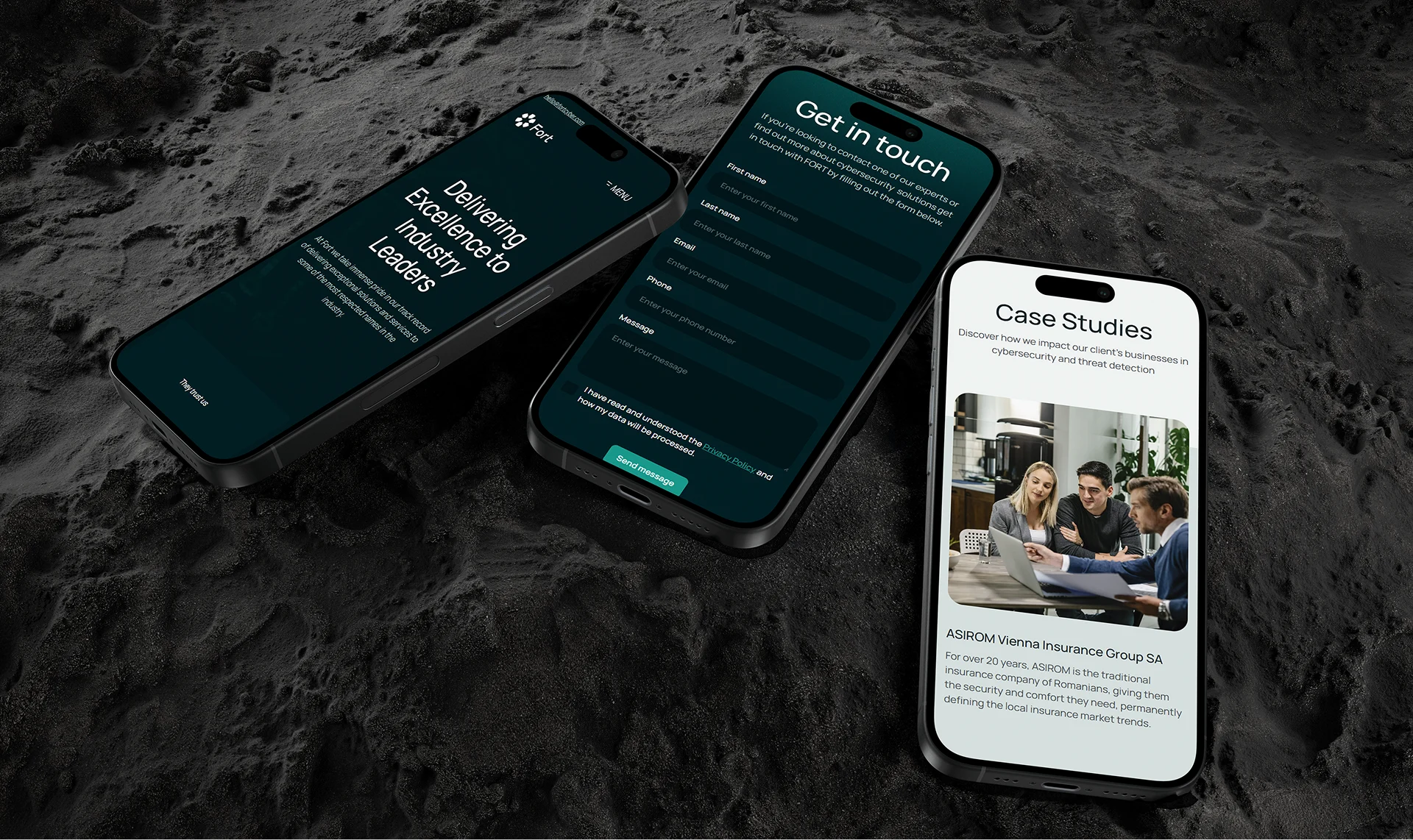
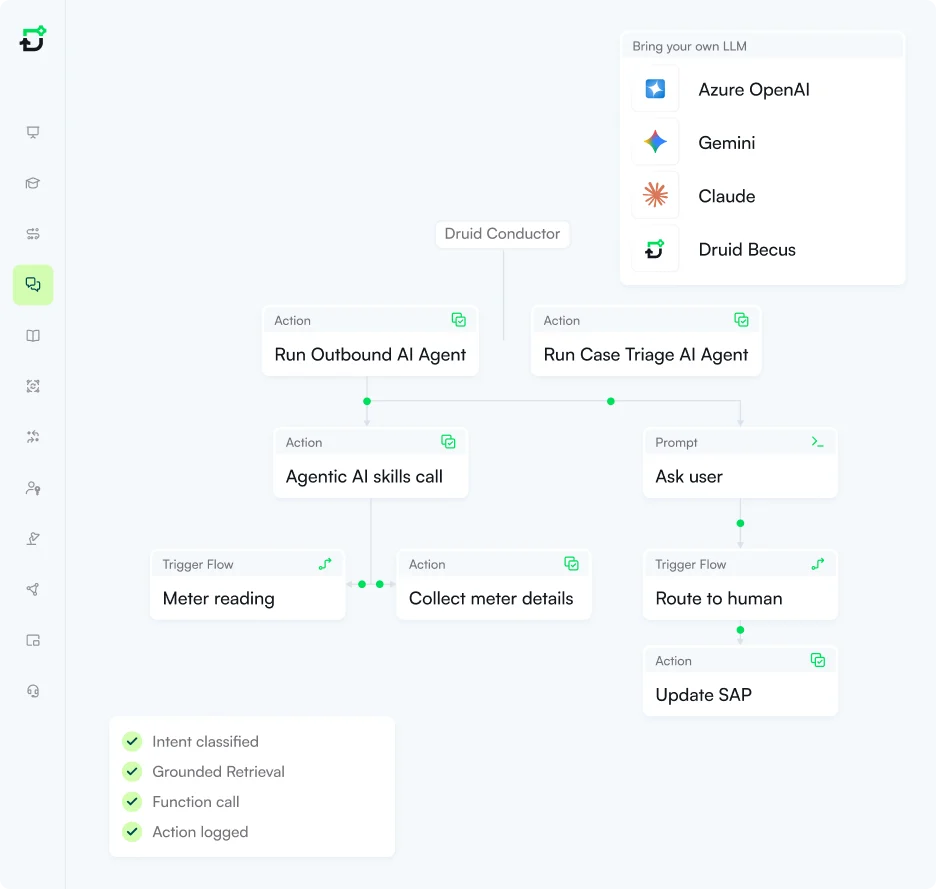
We partnered with Druid to transform their brand: from a generic enterprise AI positioning into a distinctive system built on proof. While Druid’s Conductor technology orchestrated AI agents into digital employees handling real work, their brand positioning made them look like every other chatbot platform.
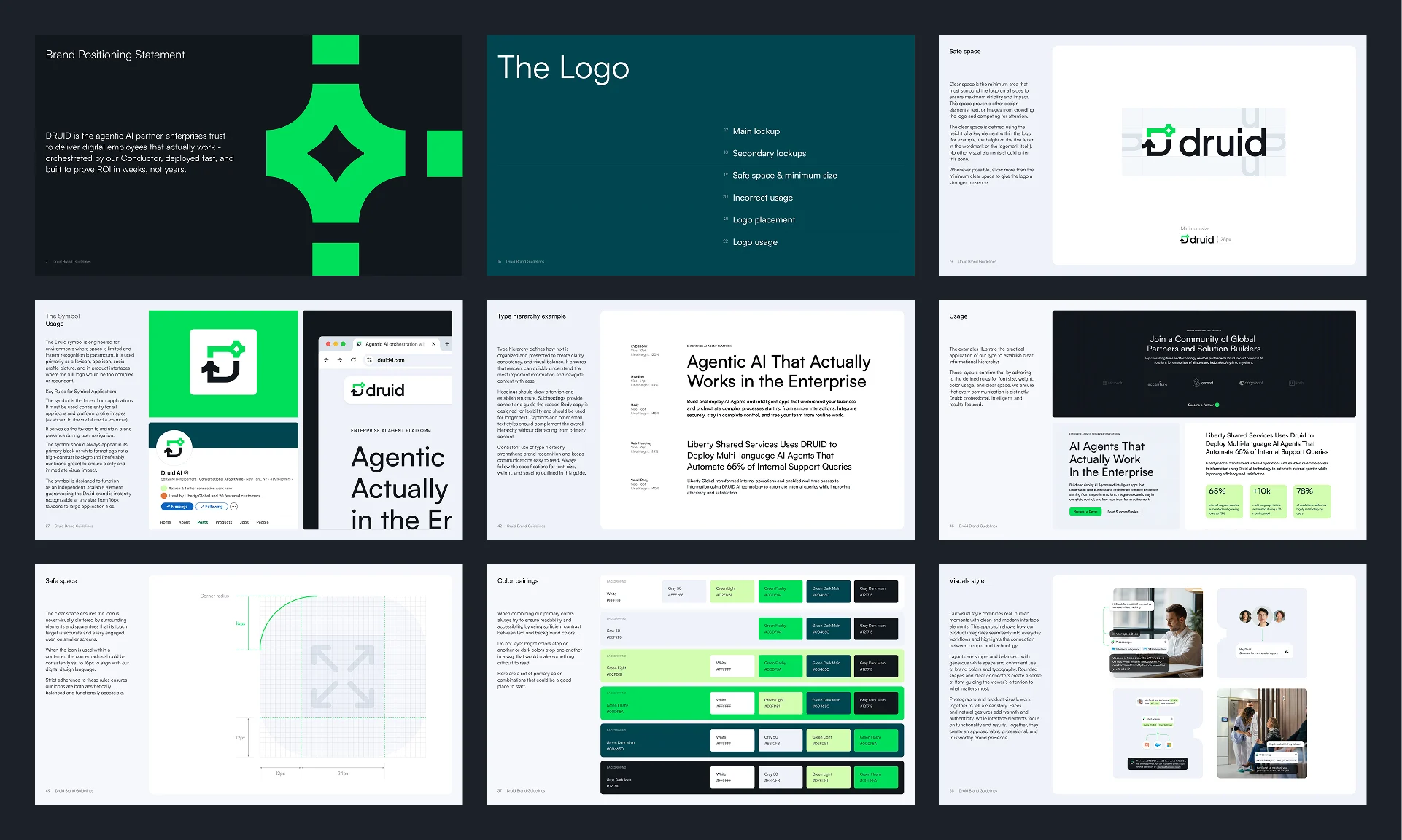
We developed a complete brand system: new positioning as “the agentic AI partner enterprises trust,” signature visual identity with a distinctive color palette, messaging that addressed real buyer concerns (unpredictable costs, black-box AI, pilots that never scale), and a website that showed proof. The result is clear differentiation, partner confidence, and a brand that proves what AI can do instead of promising what it could be.
- Brand Identity, Market positioning, UI/UX Design, Web Development
The context
Enterprise AI has a credibility problem. The market is saturated with vendors that promise transformation, but functional heads making AI decisions face endless pilots that never reach production, unpredictable costs, and black-box algorithms they can’t explain to stakeholders.
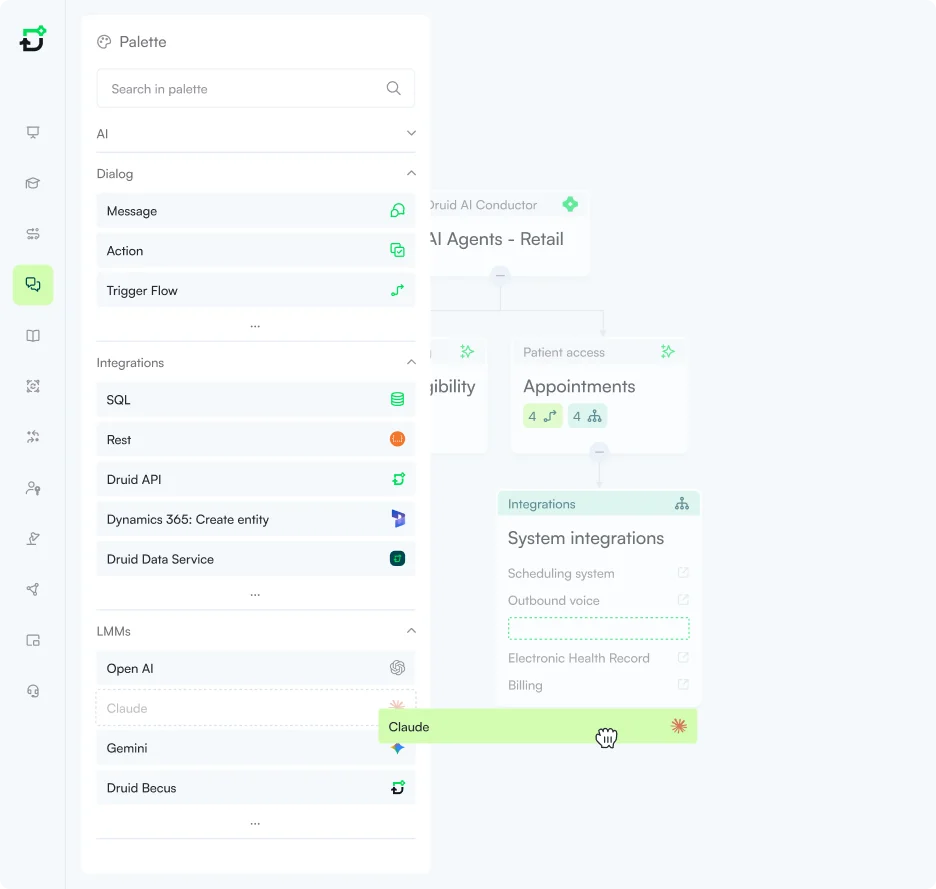
Druid’s technology actually delivers. Their proprietary Conductor orchestrates AI agents into digital employees handling real work across HR, finance, customer support, and IT. But the brand didn’t reflect this. Generic positioning and cautious visual identity made them indistinguishable from competitors.
The trust gap in enterprise AI
Druid needed a brand that proves “it works”.
Generic messaging didn’t differentiate Druid from basic chatbot platforms. The visual identity felt cautious and corporate. Every element needed to address real buyer concerns: cost predictability, transparent decision-making, and systems that integrate with existing infrastructure.
The challenge was building a brand based on evidence, not aspiration, one that reflected the sophistication of the technology and gave enterprise buyers the confidence to move from pilot to production.
Building the brand on proof, not promises
We developed the brand through a series of strategic workshops. The team mapped Druid’s offering profile, personality semantic scale, target audience, and customer value drivers, uncovering that customers chose Druid because “it listens, it adapts, it delivers.”
This insight drove the strategic foundation: enterprises don’t need more AI promises. They need AI that proves it works.
We built a complete brand system, from positioning and messaging architecture to visual identity and website transformation. Every element needed to address real buyer concerns: cost predictability, transparent decision-making, and systems that integrate with existing infrastructure. The brand would be built on evidence, not aspiration.
Outcomes
Brand foundation
Three pillars positioned DRUID as the partner that proves ROI, not promises it.
New messaging
"Chatbots" became "digital employees," and cautious language became bold confidence.
Visual identity
Signature colors and specific symbols created instant recognition.
Website transformation
Complete rebuild: copywriting, design, and development
Control. Accuracy. It works. These three pillars became Druid’s brand foundation, supported by a new positioning: Druid is the agentic AI partner enterprises trust to deliver digital employees that actually work, orchestrated by the Conductor, deployed fast, and built to prove ROI in weeks, not years. The messaging transformed from cautious corporate language to bold confidence: “chatbots” became “digital employees,” “transform your business” became “AI that actually works,” and the Conductor became the hero technology.
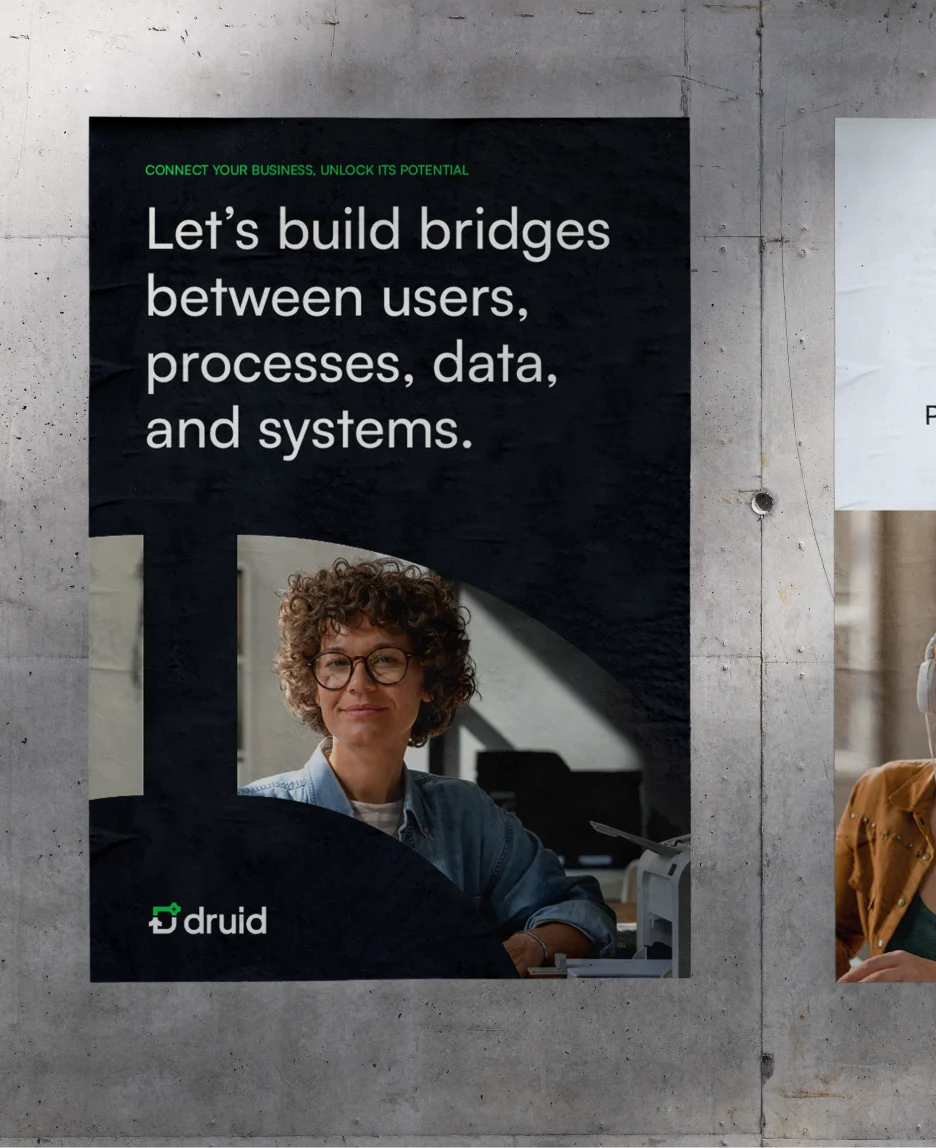
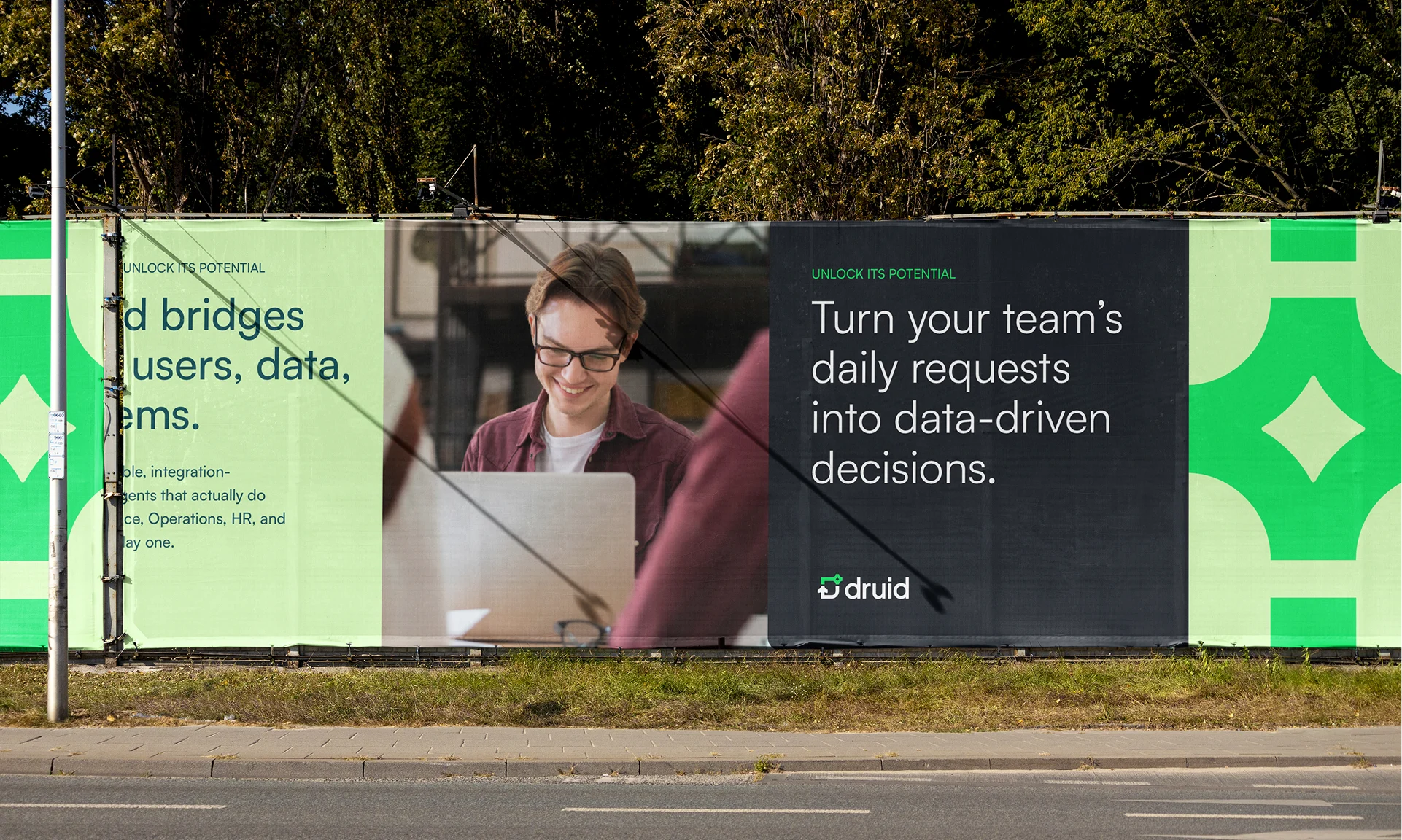
The visual identity system created instant brand recognition. Signature green distinguished Druid from traditional enterprise tech palettes. The Druid symbol became a three-part orchestration metaphor: foundation, intelligence layer, and action loop.
Clean typography, generous white space, and authentic photography balanced premium professionalism with modern approachability. Tone of voice guidelines ensured consistency: be clear and human, show empathy, highlight outcomes, use unique language (Conductor, digital employees, enterprise-grade), and avoid commodity terms (chatbot, black box, disruption).