When the transactional model dies, and relationships take over with Cristina Siscanu
written by
Călin Alungulesă
date
15 January 2026
written by
Călin Alungulesă
date
15 January 2026
Our “Frontline insights” series brings together perspectives from B2B marketing leaders who are navigating the industry’s challenges in real time. We're exploring what's working, what's not, and how teams are adapting to economic uncertainty, shifting buyer behavior, and the latest technologies.
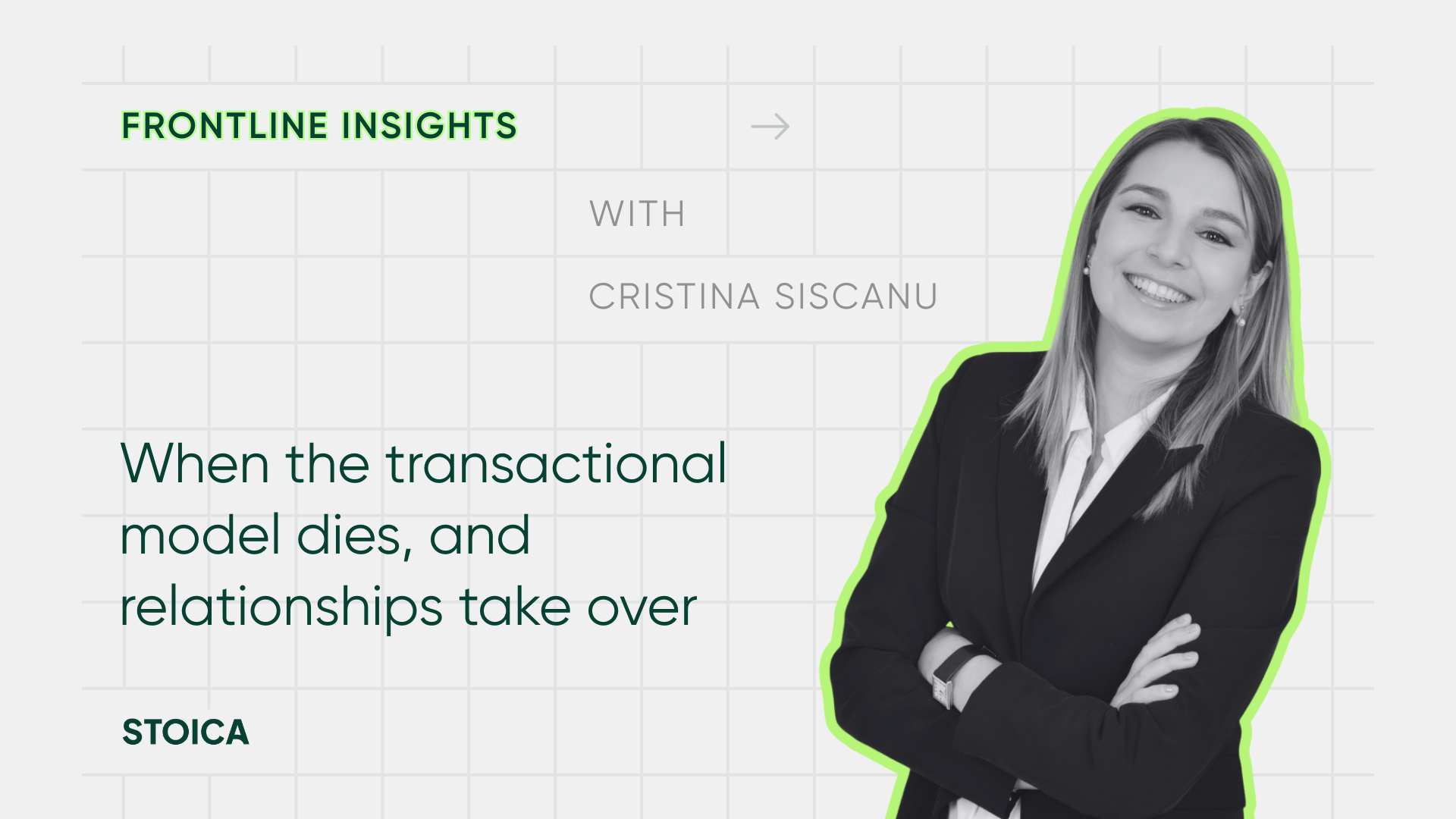
This conversation features Cristina Siscanu, a Marketing & Communications Expert with over 9 years of experience in tech startups and B2B marketing.
Currently based in Venice and working as a MarCom consultant on multiple projects, including the Iceland Eclipse Festival, Money Motion, and Capital 33, Cristina shares what happens when fundamentals meet flexibility and why community matters more than transactions.
Last year required constant adaptation across Cristina's client base, but some principles proved their lasting value.
"What I've seen across my clients is a continuous need to adjust and recalibrate. Long-term growth objectives remain important, but the real differentiator has been the ability to adapt quickly to changing market conditions."
Within this adaptability, content quality became critical. Brands started prioritizing substance over templates. Cristina noticed that more and more brands were returning to the fundamentals: excellent copywriting, a strong journalistic narrative, and thorough research.
Community building yielded results that paid campaigns could not match:
"Creating spaces where audiences can engage directly, share feedback, and connect with each other generates the kind of organic growth that paid campaigns simply can't replicate. When your community speaks highly of your work, that credibility is invaluable. This is why 'dark social media' and forums continue to grow in popularity and usability."
Cristina noticed a clear change in client behavior, which led her to focus on community:
"Community events and groups are becoming significantly more powerful. There's a clear shift toward people wanting to spend time together rather than just spend money."
The engagement at in-person gatherings is stronger, with a real hunger for genuine connection and professional communities where people feel they belong. The transactional model is giving way to something deeper:
"Customers aren't just buying products or services; they're choosing which communities they want to belong to."
What surprised Cristina most wasn't a specific tactic but how values-driven communication became an operational necessity during Romania's turbulent election period:
"The power of honesty surprised me in both positive and negative ways. In Romania in particular, many brands demonstrated humanity and solidarity during the turbulent elections, fostering a genuine sense of community that I had not previously witnessed on social media, or at least not to this extent."
But the flip side of this approach to communication created a constant tension:
"Significant manipulation was taking place at the same time. During that time, my clients and I were constantly pivoting, questioning how to communicate and whether we should communicate at all. Sometimes we preferred silence, and sometimes we went out with a megaphone in the street. No joke."
As Cristina puts it, this shift in communication wasn’t just about simply updating the content calendar. It was something deeper:
"This year taught me that tactical flexibility isn't just about updating your content calendar. Maybe, sometimes it's about making real-time ethical decisions about your brand's voice in charged moments."
In this context, event communications evolved as well, with social media channels shifting from awareness to supporting mid-to-bottom funnel actions. The shift reflected a larger need for marketing to achieve tangible results.
When it comes to flexibility, it goes beyond just its impact on content. The elections also affected budgets. Until the end of H1, companies remained cautious, budgets stayed flexible, and a wait-and-see attitude prevailed. After June, optimism grew, and the focus shifted toward business. But the lesson extends beyond that specific period:
"The first half of the year taught us all to build more flexibility into our budget planning. The days of setting an annual marketing budget in January and sticking to it rigidly are behind us."
Cristina's approach to AI reflects her broader philosophy about maintaining authenticity while embracing new tools:
"I use AI as a thinking partner and efficiency tool, but never as a replacement for authentic voice or strategic thinking. For content ideation and drafting, I work with Claude - it's become invaluable for brainstorming, refining messaging, and iterating on copy until it truly sounds like me. The key is using it collaboratively, not as a shortcut. I'll draft ideas and ask it to help me refine tone, challenge my thinking, or spot gaps in my logic."
For research, AI tools help synthesize information quickly, but the fundamentals still require human judgment.
"AI works best when you're clear about what you want and willing to iterate. It amplifies your capabilities when you have a strong point of view to begin with, but it can't create that point of view for you."
As Cristina puts it, the real value isn't in the tools themselves, but in how thoughtfully you integrate them into your workflow while maintaining what makes your work authentically yours.
When asked about the most important skills for B2B marketing leaders right now, Cristina identifies a combination:
"Resilience and adaptability, without question. The pace we were accustomed to has changed swiftly with AI and all the technological shifts happening around us."
Resilience means having the stamina to keep going when strategies don't work, when budgets get cut mid-year, or when external events force a complete rethinking. Adaptability means being comfortable with discomfort and guiding teams through change without pretending to have all the answers.
But there's a third essential element:
"You can't be adaptable without empathy. You need to truly understand your team's perspectives and your customers' needs to make decisions that actually work in these rapidly changing conditions."
This combination of resilience, adaptability, and empathy shows up practically in how Cristina tackles one of marketing's toughest challenges: balancing long-term strategy with the need for quick results.
She describes it as needing both a North Star and constant route adjustment. The long-term vision - brand positioning, core values, and the community being built - must remain consistent. However, the tactics for achieving that vision must be fluid.
Stakeholder education becomes essential here. Marketing and public relations are marathons, not sprints, and some outcomes, such as genuine community building or earned trust, require time. You cannot rush authenticity. The key is to be open about what can be measured quickly and what takes time, and to consistently communicate the benefits of both approaches.
Cristina anticipates several changes that will reinforce her focus on authenticity and community. Regarding AI integration, she anticipates a split between brands that use AI as a crutch and those that use it to amplify their authentic voice.
Community-driven marketing becomes even more central as people crave genuine connection and belonging. Brands that can facilitate these spaces, whether online or in person, will have a significant competitive advantage. The transactional model is dying. The relationship model is taking over.
Values matter more than ever. After the tumultuous political climate, audiences are more discerning about which brands they support. They want to know what you stand for, not just what you sell. And budgets will remain dynamic rather than fixed, with marketers planning in six-month cycles instead of annual roadmaps. The need for agility while maintaining strategic direction has become permanent.
Her advice is simple:
"Return to the fundamentals while embracing change. Great copywriting, solid research, and authentic storytelling. These never go out of style."
Build genuine relationships with your audience, team, journalists, and industry experts. These connections outlast any trending platform or algorithm change.
Relevance isn't about being everywhere doing everything. It's about being meaningfully present where it matters.
Spread the word with other marketers on the front lines so they can learn from these insights, or at least breathe a sigh of relief, knowing they're not the only ones navigating this chaos.
If you want to contribute and share your insights, reach out to us here or on LinkedIn.