On May 26th, we hosted a closed-circle event in Bucharest together with Dr. Peter and Dr. Alison Lyall of Ascent Advisory Services. The session covered the disconnect we sometimes see in B2B companies, and one we should be addressing more: the Value Gap.
At the most basic level, the Value Gap comes down to being consistent. As Dr. Peter Lyall put it during the session:
“If you start making promises out in the marketplace, they really don’t mean anything without the actions. You said you were going to do something, so you do it. You make a promise, you fulfill it.”
The Value Gap is what happens when that promise breaks down, most often because the story and the business were never properly connected in the first place.
What is the Value Gap?
Most B2B companies can articulate what they do, but far fewer can clearly explain how they create value for clients, for their team, for investors, and whether their daily decisions are actually moving toward that or quietly working against it.
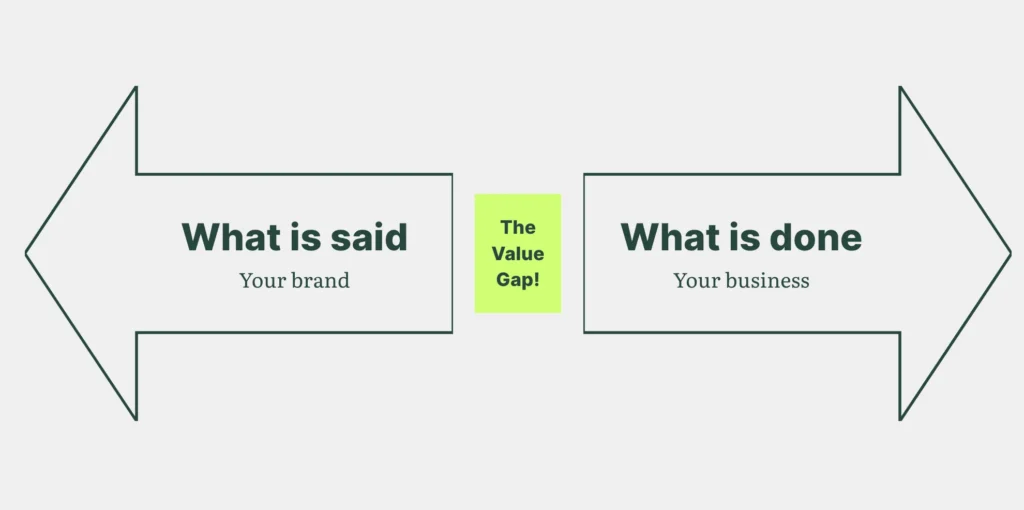
When that gap exists, it shows up everywhere: in sales conversations that don’t land, in client relationships that plateau, in investor confidence that’s harder to build than it should be.
The gap doesn’t stay invisible for long. Clients feel it, investors see it, and by the time it’s obvious, it’s already costing you.
The gap usually has two causes. The narrative is generic, disconnected from how the business actually makes decisions and creates value for its customers.
The second cause is when the business doesn’t follow through on its promises, so execution drifts away from the story without anyone noticing until the damage is done.
The narrative problem
The fix for most companies is to give their story and positioning a quick reshuffle, revisit the vision, mission, and values, and rewrite the website copy. Most often, with little input from the stakeholders who matter most: employees and customers.
Most of these exercises produce the same output: generic buzzwords that sound strategic but mean nothing to the people who are supposed to live by them. Frameworks filled with AI-generated jargon that lack the specificity to actually guide decisions.
The starting point should always be a harder question: What problem can only your business solve, for whom, and why would they believe you? As Dr. Peter Lyall put it:
“You cannot do everything for everybody. You have to be ruthlessly specific about what it is that you do.”
A real narrative must start with clarity and be understood by everyone, from the leadership team to the frontline. When Peterson, a global lifting and rigging company, landed on “Trust Well Placed” as their narrative, it resonated directly with their staff. Crane operators working on heavy machines that could easily produce damage when mishandled had an instant connection to the tagline. It gave meaning to what they did every day.
The VRIO Test
Once you have a solid narrative, the next question is whether your business can actually stand behind it. Most companies don’t spend enough time thinking of their internal resources and capabilities and how those impact their ability to deliver on their promise to the market (or narrative).
Are your internal capabilities, resources, and offerings valuable to your target customers?
Are these rare or hard to find?
Are your capabilities, resources, and offerings hard for competitors to imitate?
And, most importantly, is your business actually organized to put them to work?
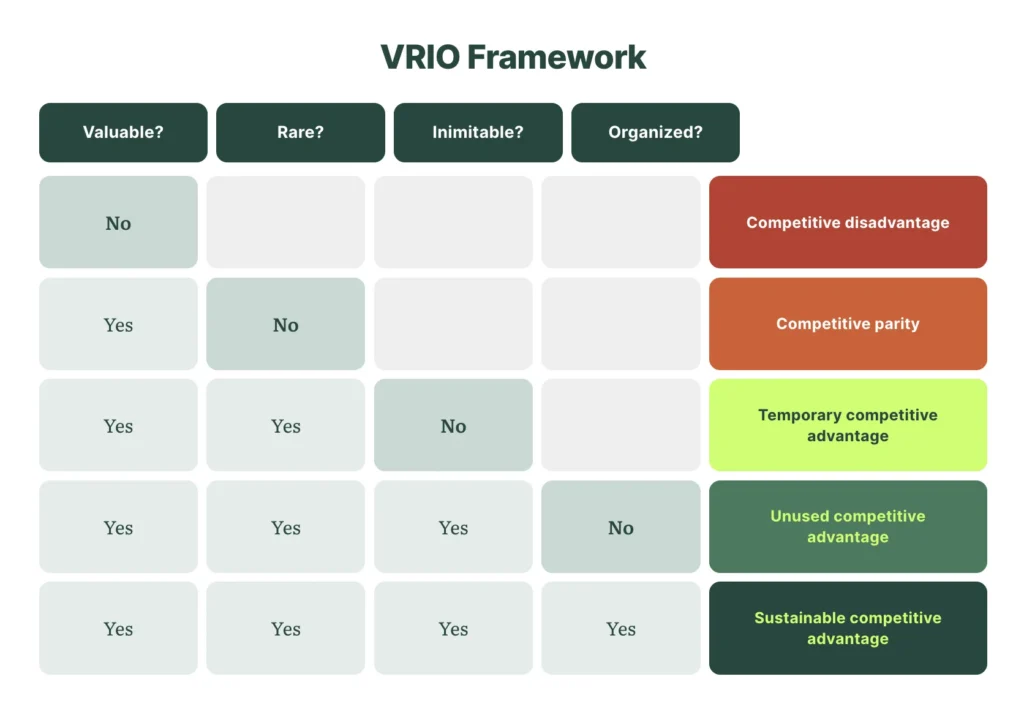
A positioning can pass the first three tests and still fail in execution, because the business isn’t organized to make the most of its capabilities and resources. If the strategy only exists on a slide deck and the operational capabilities tell a different story, it creates a gap that breaks the promise.
The Value Map
Even if you know where the gap is, you still need a tool that makes the connection between promise and delivery visible at every level of the business.
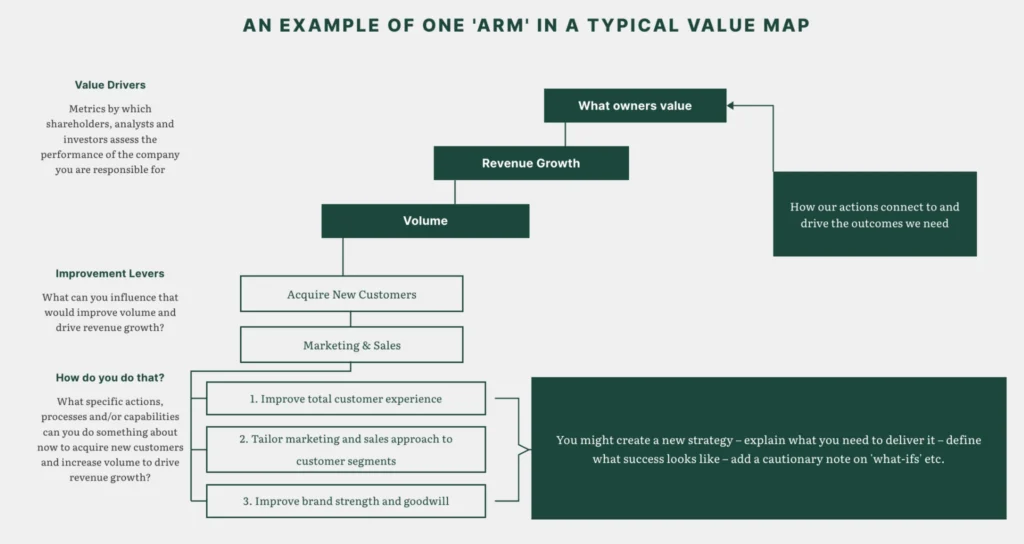
The Value Map starts with the outcomes investors care about, such as revenue growth, operating margin, and asset efficiency. Then, it works backward through the improvement levers a company can actually control, down to the specific actions, assets, and capabilities that drive them.
While strategic clarity at the top level is important, the goal of this exercise is to get alignment at every level.
As the story goes, when John F Kennedy asked a janitor sweeping leaves what his job was, he didn’t say “cleaning floors.” He said, “I’m helping to put a man on the moon”. (As mundane as the job might seem, leaves getting inside a rocketship engine are a big trouble). That’s what a Value Map is designed to create: a clear line of sight between what each person does and why it matters.
When that line of sight exists, teams move in the same direction, client relationships deepen, and investors see a business that knows what it’s doing and why. This way, growth becomes more predictable.
How to close the narrative gap
The Value Gap isn’t a new problem, but we see it undiagnosed way too often, and the fix is always the same: start with clarity. Make sure your narrative reflects it, then build the operational discipline to deliver on it beyond the marketing materials.
Most leadership teams sense something is off, but those who act on it don’t wait until it’s costing them clients or investor confidence. They ask the harder questions first.
If you’d like to take the next step on your growth journey, take the B2B Marketing Maturity Assessment to learn your maturity score, with a breakdown across market alignment and positioning to performance tracking and sales collaboration, and identify the gaps, missed opportunities, and quick wins that can drive measurable growth.